Bioethics
-
Central Europe
Every third German expects pressure for euthanasia in case of illness
The pressure on the old and sick will increase as soon as active euthanasia is legalised. Almost one in three Germans (30 per cent) expect that. This was the result of a survey conducted by the market and social research institute INSA-Consulere on behalf of the Protestant news agency IDEA.…
-
Northern Europe
Norwegian donor children able to get to know their father
This year, Norwegians conceived with the help of a donor will be able to get to know who their biological father is. However, donor-conceived persons may not yet learn who their half-siblings are. 2023 will be a landmark year, writes the Christian Norwegian daily Vårt Land. A new donor register…
-
Central Europe
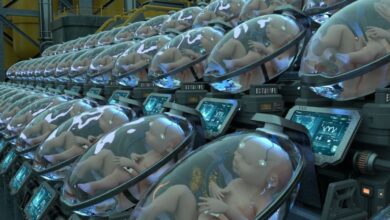
Future mother could be a machine
Is being born to a human mother really the best thing for a mother and child? Berlin filmmaker Hashem Al-Ghaili does not believe so. As far as he is concerned, children will soon come from a baby hatchery. How are his ambitions going?Babies can grow up in transparent growth capsules,…
-
Western Europe
Dutch Embryo Act expansion set to include carriers of hereditary diseases
Two leading coalition parties in the Netherlands want to see another amendment in the nation’s Embryo Act. The Liberal Party VVD and Social Democrats D66 hope that parents will be able to select embryos as a means to prevent potential carriers of life-threatening diseases such as haemophilia or cystic fibrosis.…
-
Central Europe
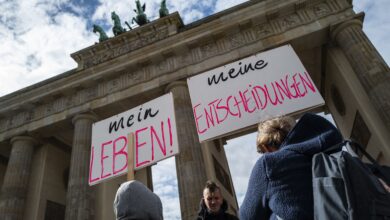
Number of abortions in Germany on the rise
After two years of declining abortions in Germany, the numbers are rising again this year. In the third quarter of 2022, around 26,500 abortions were reported in Germany. This was announced by the Federal Statistical Office on Thursday. Accordingly, the number of abortions increased by 16.7 per cent compared to…
-
Western Europe

Dutch ban on assisted suicide does not violate human rights
The Dutch government may keep enforcing its ban on assisted suicide, a court in The Hague ruled. The court case started because the so-called Cooperation Last Will disagreed with the ban. The Cooperation believed that the Dutch State violated International Human Rights because it is hard to achieve a self-determined…
-
Northern Europe
Patients fertility treatment become fathers involuntarily
A women's clinic in Halmstad, Sweden, has created embryos with the sperm of men who submitted it for their fertility treatments only. Thus, they fathered two so-called donor children born in 1986 and 1993, respectively, Varlden Idag reports. When these children found their biological fathers through research, they were met…
-
Christian Life
Anne is happy that she did not go for gender reassignment
As a girl, Anne loves to romp. A dress makes her “unhappy”, even now. At 25, she realises she hais transgender feelings. She does not transition, even though a doctor says that is the best solution. “My life is a successful non-transition,” explains the now 28-year-old. “I went through a…
-
Western Europe
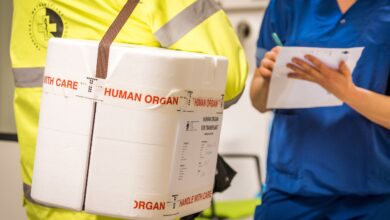
Fewer Dutch willing to donate organs
The number of Dutch people who refuse to donate organs after their death grows faster than the number of people who are willing to do so. In the so-called Bible-belt, the willingness is quite low. New statistics from the Dutch Central Desk of Statistics (CBS) show that. Since 2020, the…
-
Western Europe
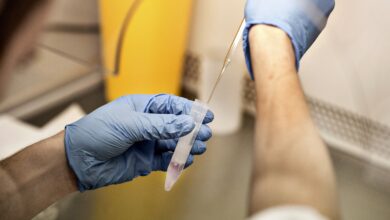
From September onward, French sperm donor is no longer anonymous
As of September 1st, the French sperm donor will no longer be anonymous. His children can request access to this information when they come of age. One year after the new bioethics law opened medically assisted reproduction to lesbian couples and single women, another law entry came into force. As…