

From musician to politician: what drives Ladislav Ilčić?

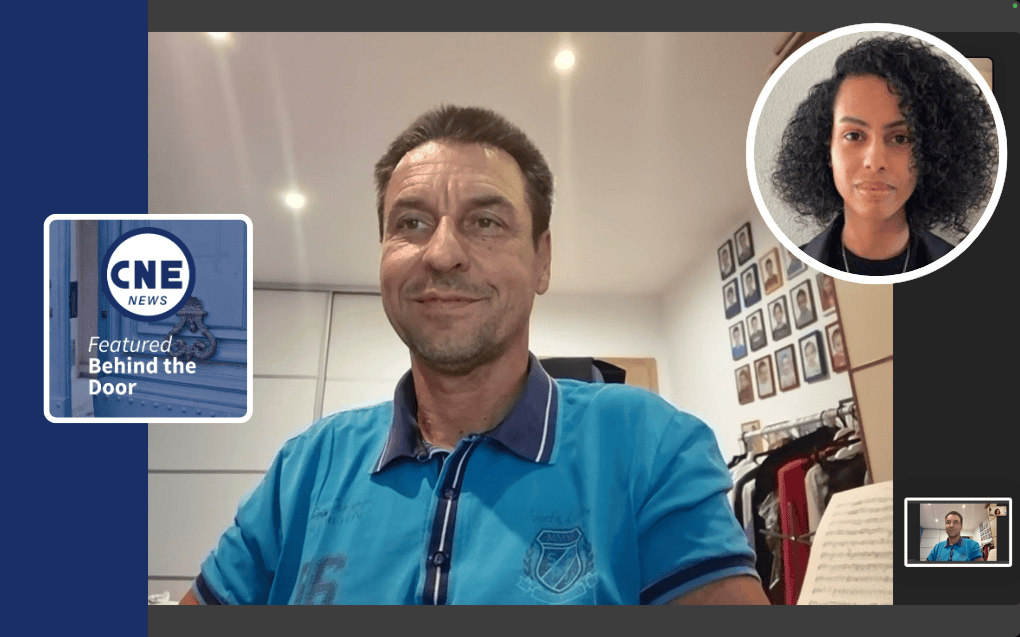
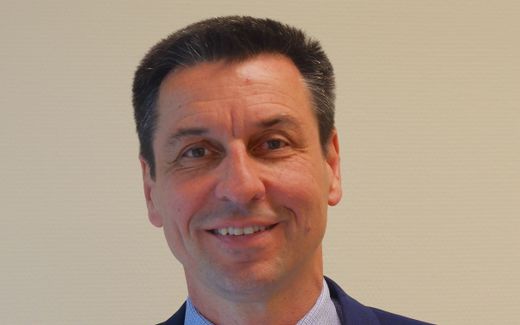
Ladislav Ilčić. Photo CNE, Canva
Christian Life
Ladislav Ilčić never planned to go into politics, but served as a Member of the European Parliament from 2021 until 2024. Right now, he is a musician, plays in an orchestra and works as a political consultant. “I care more about expressing the truth than about myself”.
What led your journey?
“My political career was a consequence of my different engagements in the NGO sector. I did what I felt needed to be done, to fulfil what I thought was God’s will.
I grew up loving both music and science. Eventually, I chose to study music, planning a life in orchestras and chamber groups.
In 1995, my sister introduced me to the Teen STAR program (which stands for Sexuality Teaching in the context of Adult Responsibility). The program offers sex education rooted in natural law, parallel to Catholic teachings and emphasises human dignity, responsibility, and decision-making skills. I became very active in that field. As our work grew, we faced intense criticism from groups that opposed our approach and what we saw as the defence of parental rights, which motivated us to form the organisation GROZD (Parents’ Voice for Children).
Despite ongoing public and media attacks, our sexual education programme was eventually implemented in schools, and a large majority of parents chose it over the alternative.
I also initiated Croatia’s marriage referendum in 2013, helping collect 800,000 signatures and ultimately securing a constitutional definition of marriage as a union between a man and a woman.
“I believe that true love is measured by our willingness to sacrifice for others”
Over time, my increasing civic involvement led to the founding of a political party, Hrast, which translates to “oak.” And I eventually became a member of the Croatian Parliament and later of the European Parliament. Although political work was challenging, I always acted according to my beliefs, supported by the fact that my primary profession as a musician allowed me independence from negative political attention.”
What does GROZD do?
“I first became involved in sexual education in general and later helped develop a broader health-education programme that included topics like violence prevention, addiction prevention, communication, and quality of life. I coordinated a team of 22 experts, and together we created a program that, in addition to sharing information, also promoted what I consider to be universal human values, such as dignity, love, and self-control. I believe that true love is measured by our willingness to sacrifice for others, and this is something my wife and I try to teach our six children.
I often reflect on the idea that life offers two kinds of positive feelings: short-term satisfaction and the deeper fulfilment that comes from taking steps toward long-term goals. Modern society focuses too much on immediate pleasure and not enough on purpose, which leads to feelings of emptiness and psychological strain.
Rediscovering enduring values is essential for a healthy society because historically, societies flourished when they lived by shared values and declined when they turned solely toward materialism and individualism. For me, rebuilding relationships —with ourselves, with others, and with God— is the path toward restoring connection and strengthening our communities.”
Dilemmas
Blazer or jumper?
Blazer.
Are you an evening person or an early bird?
Early bird.
Tea or coffee?
Milk.
Public transport or taxi?
Public transportation (but biking is the best).
Would you rather read a book or watch TV?
If there is a football game, then I would rather watch TV. And if there is some stupid entertainment on TV, then I would read a book.
Listening to music or doing sports?
Doing sports.
How did you get into politics?
“I never really knew what the next step in my life would be. And although it seemed natural that I eventually moved from the local city council to the Croatian Parliament and then the European Parliament, none of it was planned.
However, even without those roles, I would still have fought for the same values. I often reflect on how both non-Christians and Christians, including myself, can become too focused on personal plans and comfort. Many good Christians develop their faith and lead responsible lives, yet sometimes avoid stepping into situations where they are truly needed. I often think of the parable of the Good Samaritan, which reminds me that following God’s plan may require us to interrupt our own.
Being active in society is challenging today, especially when public engagement can lead to criticism, ridicule, and media scrutiny. Still, I believe we cannot choose only a comfortable life, and we must be willing to face difficulty when our values call us to act.”
So why did you leave politics?
“I am currently not a member of any political party, even though I did not originally plan to leave. However, the parties closest to my worldview in Croatia, in my opinion, lack genuine leadership. I see some parties focused mainly on their public image. In contrast, others seem motivated primarily by gaining positions in government, which leaves the political landscape in poor condition.
Politics should remain centred on human beings and their needs, not on extreme or impractical ideas. I recall working in the European Parliament’s fisheries committee and encountering views that prioritised animal concerns over human interests, which reinforced my conviction that we need a sound political philosophy. I believe that many current policies, particularly within parts of the Green movement, have yielded disappointing results, which is why many Europeans are now shifting politically to the right.
At the same time, I am concerned that some right-wing figures who gain attention do not represent the Christian or conservative principles I support. While I agree with some of their positions, especially regarding immigration, they are not the kind of leaders I would endorse. I am very proud of people like Schuman, De Gasperi and Adenauer, the ‘fathers of Europe’. I believe they were all practising, believing Christians.”
About Ladislav Ilčić
Ladislav Ilčić has been married to his wife Lydia for 28 years. They have one daughter and five sons. They became grandparents for the second time this year. The family enjoys spending time together and likes to bike, swim, play football, or tennis. They also dance every Sunday. Ladislav believes it is crucial to have beautiful moments and memories with your family.
How have you combined your work and family life?
“It was not easy. I was in Brussels from Monday to Friday, but I also had activities over the weekend. Additionally, I had to travel regularly to various countries and cities. While in Croatia, I was also busy organising political academies and conferences. But I think children can sense when you do something useful. And when you finally come home, they know that you want to spend time with them. My wife also played a crucial role in taking over household responsibilities."
How would you describe your style of leadership?
“I try to involve as many good people as possible, knowing that others often have strengths I don’t, and that bringing those qualities together makes our work stronger. I also believe that authenticity is essential because people cannot truly follow someone who is not genuine. When politicians primarily act out of personal interest, their impact is often short-lived and rarely serves the common good. That’s why I see authenticity and sincere motivation as crucial for meaningful leadership.”
What are your goals and ideals?
“To use my energy and knowledge to change society. My faith means everything to me. The most significant event in human history is the resurrection of Jesus Christ. That is what shaped our society and what shaped me. The most important goal in my life is to save my soul. To utilise all the energy and talents God has given me. To be as good as I can to my wife, children, friends, Croats, Europeans and to whoever I meet. That is the final goal.”
How do you see the future as a Christian in your country?
“I am optimistic in the long term, because I believe the ultimate victory already belongs to Christ. But even in the short and medium term, I see encouraging signs of change in Croatia. Young people today are questioning mainstream liberal social patterns, and research shows they are becoming more conservative than expected.
This shift could lead to significant societal change, similar to how unexpected political outcomes have occurred elsewhere when people stopped trusting mainstream narratives. The real question, in my view, is whether genuinely responsible and value-based leaders will emerge, rather than figures who do not represent the Christian principles I support.”
How do you deal with bad media coverage?
“I care more about expressing what I believe is true than about protecting my public image, even though I understand that image matters in politics. In the European Parliament, I often affirmed that all people have equal dignity and that I oppose any form of violence or hatred, while still defending my right to disagree with specific policies and to choose the kind of education I want for my children. When I remained respectful and calm in these debates, it sometimes angered others because I did not fit their expectations of someone who disagreed with them.
I believe many Christians hesitate to speak publicly because they fear criticism. I experienced this myself when NGOs filed lawsuits accusing me of discrimination for promoting marriage, even requesting a prison sentence, though I ultimately won the case.
Another major controversy arose when I opposed the Istanbul Convention, which is officially aimed at combating violence against women. However, I argued that some countries adopting it show higher rates of violence than countries that do not. And parts of the convention introduce concepts of gender that I believe are harmful. During the related court proceedings, some groups claimed that their members felt emotionally distressed by our campaign. Yet, I defended the principle that freedom of speech cannot be restricted simply because someone feels hurt by differing opinions.”



Related Articles