

How arts draw Europe back to paganism

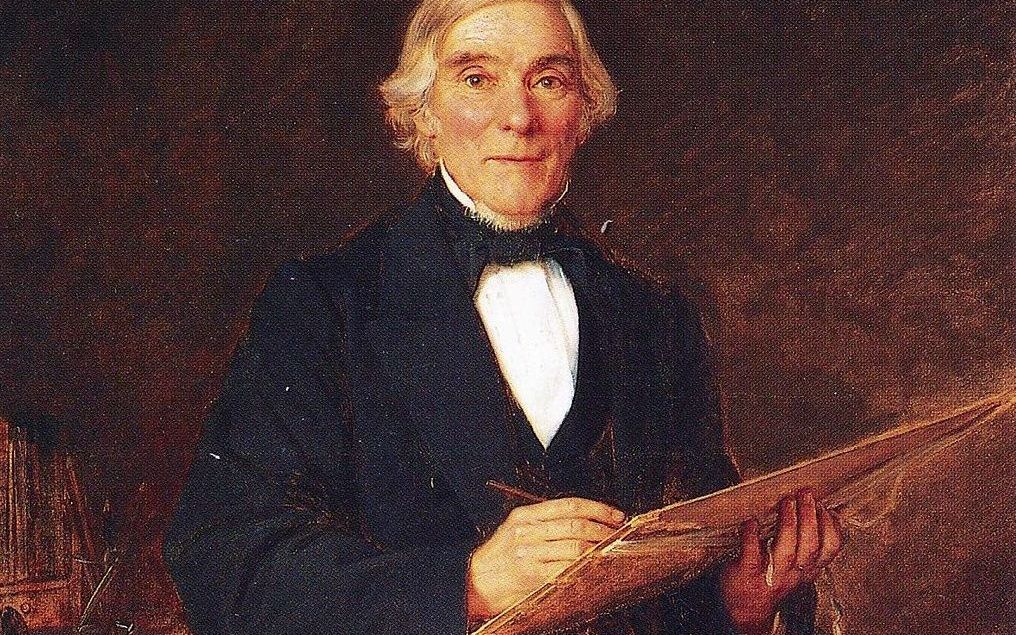
Artist Elias Lönnrot. Photo Wikimedia Commons
Opinion
Whether we like it or not, we are confronted with art all the time. There is no need to visit a museum. We encounter all kinds of architecture in our cities. Our furniture is a certain form of art. And all arts communicate a message. Most of the time we don't even notice it, but arts are probably the most unsuspected tools in shaping culture and our view of the world.
Even our understanding of history is influenced by art. In Finland, the modern understanding of history is perhaps best symbolised by Akseli Gallen-Kallela's painting The Departure of Väinämöinen (1906). The painting is divided into two parts. One part depicts the demigod Väinämöinen departing from a land that looks like a Finnish forest. He has several passive spectators. The other part, in the background, depicts a crowd of sick and weak people worshipping a baby in his mother's arms. This scene depicts the last song of Elias Lönnrot's Finnish epic poem Kalevala.
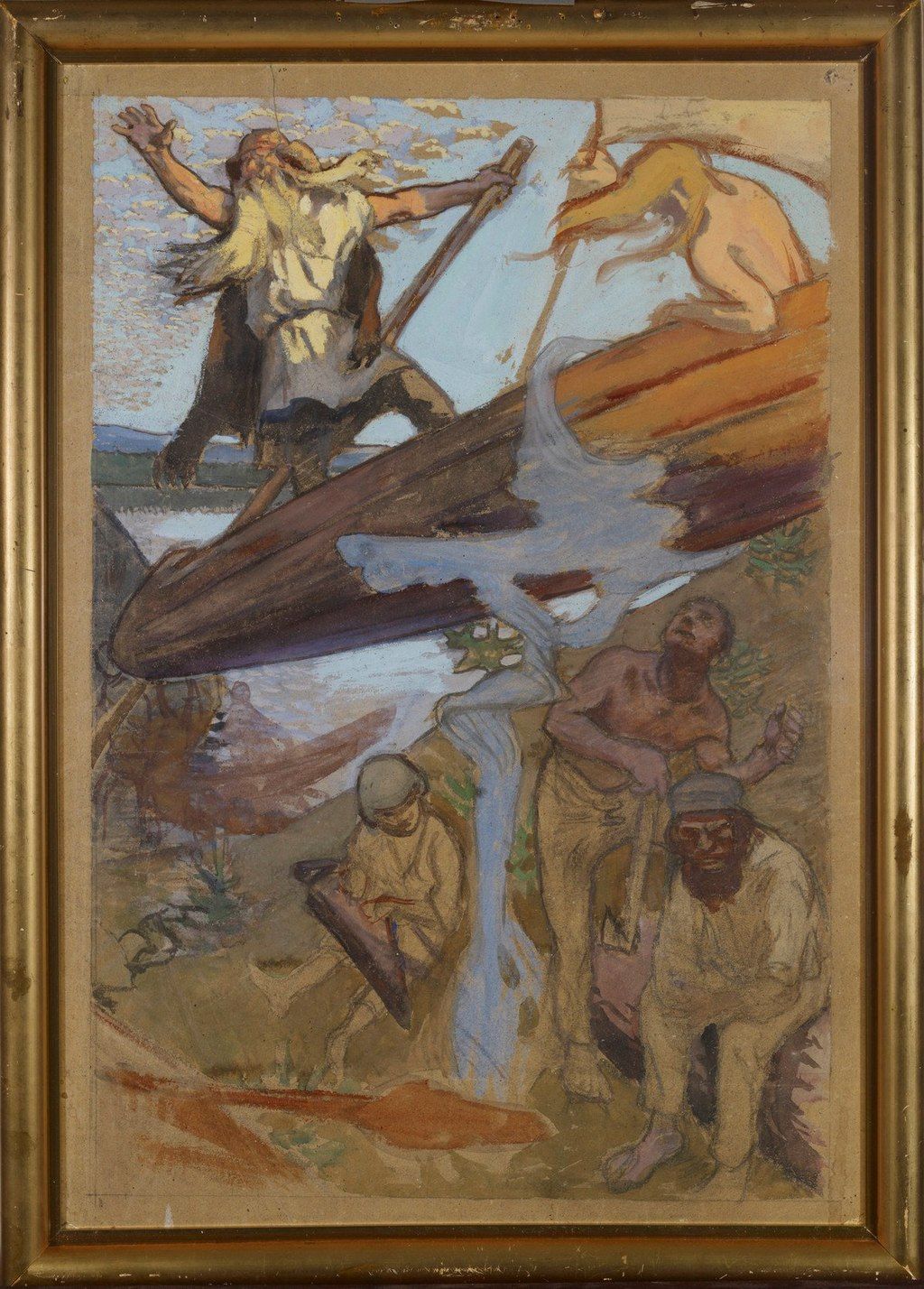
The message of both artists is clear: the soul of Finland lies in ancient paganism. Christianity –with Jesus and Mary symbolised as the baby in his mother’s arms– on the other hand, is nothing more than a parasite that has made Finland sick. The solution? A return to paganism!
Romantic ideals
Akseli Gallen-Kallela and Elias Lönnrot are well known in Finland. They were artists shaped by the nineteenth century type of humanism with a strong touch of romanticism. As it was the case elsewhere in Europe, these people believed that the true roots of their nation lie in its pre-Christian past.

The Kalevala poem is now part of the Finnish collective consciousness. However, this has not always been the case. This is evidenced, for example, by one of the oldest Finnish hymns written by a certain Ragvald in the fourteenth century. The first verse read:
Therefore, people of Finland Sing a hymn of thanksgiving. In due time, the burden of paganism was broken.
Clearly, generations that were closer to the pagan era than Gallen-Kallela was, viewed paganism as harmful. Unlike the God of Christianity, Who fully revealed Himself through His Word, the gods of paganism were unpredictable. This created a society where the majority lived captive to the sacrifices imposed by the gods through shamans, pagan priests who were believed to be able to communicate with the gods.
In contrast, nineteenth-century romantics, such as Gallen-Kallela and Lönnrot, promote paganism, but never lived in a pagan society themselves. They did not experience the fears that came with it. Rather, they lived in a culture that had been Christianised for centuries.
Doors
This Finnish situation is comparable to all other European nations. Christianity freed Finland, as well as all of Europe, from false beliefs. The Word of God opened the doors to the development of all spheres of European society.
Only Christianity brought the concept of human dignity, for all are created in the image of God. Access to the Word of God for all, and not just for an elite, has developed universal education, the rule of law, private property and free trade. These values have made Finland one of the best nations in the world, and European civilisation one of the most advanced in history.

Modern arts
The Departure of Väinämöinen and Kalevala show how arts were used in the past to subvert the Christian order in a nation and replace it with humanism. But what about modern arts?
In Finland, one of the best expressions of modern arts is the new library of Helsinki called Oodi (2018). The horizontality of the edifice is in sharp contrast with the verticality of a cathedral. This is no coincidence.
The edifice was built by the Danish architecture company Ramboll. Their website reveals that their philosophy is centred on sustainable change for people and nature. In other words, man and nature are supreme, while God is totally absent. This is the modern version of humanism, with a strong emphasis on sustainability and a clear turn toward environmentalism.

Why have we moved from the confident humanism of the nineteenth century to modern-day environmentalism?
Nineteenthcentury materialistic humanism was centred on man alone and it produced Marxist societies like the Soviet Union. With this new religion, man thought that he could engineer the whole of life. In the Soviet Union, this led to massive agrarian plans that were meant to satisfy the needs of all the people. As a result, these plans produced major ecological disasters. By the 1980s, nearly sixty years after the communist revolution, Russians began to feel the consequences.
This worship of nature is nothing new. It is simply a return to ancient paganism.
It is not a coincidence that the last leader of the Soviet Union, Mikhael Gorbachev, was a known worshipper of mother earth, and promoter of religious environmentalism. Nineteenth century humanism could not develop healthy societies, let alone take good care of God’s creation. It could only lead to the religious environmentalism of our day.
The above shows that humanism could not sustain itself, let alone equip man to exercise dominion over God's creation, a new form of humanism was now necessary. Such a new humanism should be a kind that restored “mother earth” which, or rather who had been badly abused. It won't come as a surprise to realise that Western Europe is now following the same path.
Tool
But make no mistake: This worship of nature is nothing new. It is simply a return to ancient paganism. In this sense, modern humanism is a logical step following the ancient romantic ideals of returning Europe to its supposedly pagan life source.
The arts are indeed a crucial tool to shape a nation’s worldview. For centuries, the numerous churches that were built in Europe contributed in shaping the Biblical mindset that had defined them for so long. It is crucial that all forms of Christian arts find their place back in the heart of our societies in order to shape the future of our nations according to God’s standards.



Related Articles