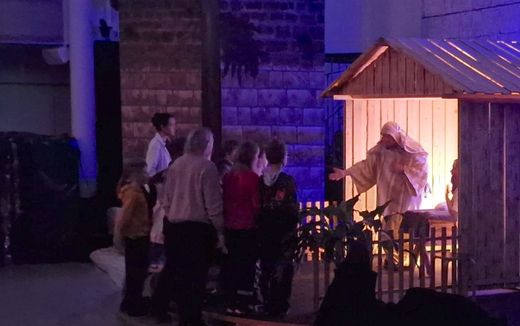


Why Christ has been painted out of Christmas
16-12-2025
Christian Life
Elina Placentino, CNE.news
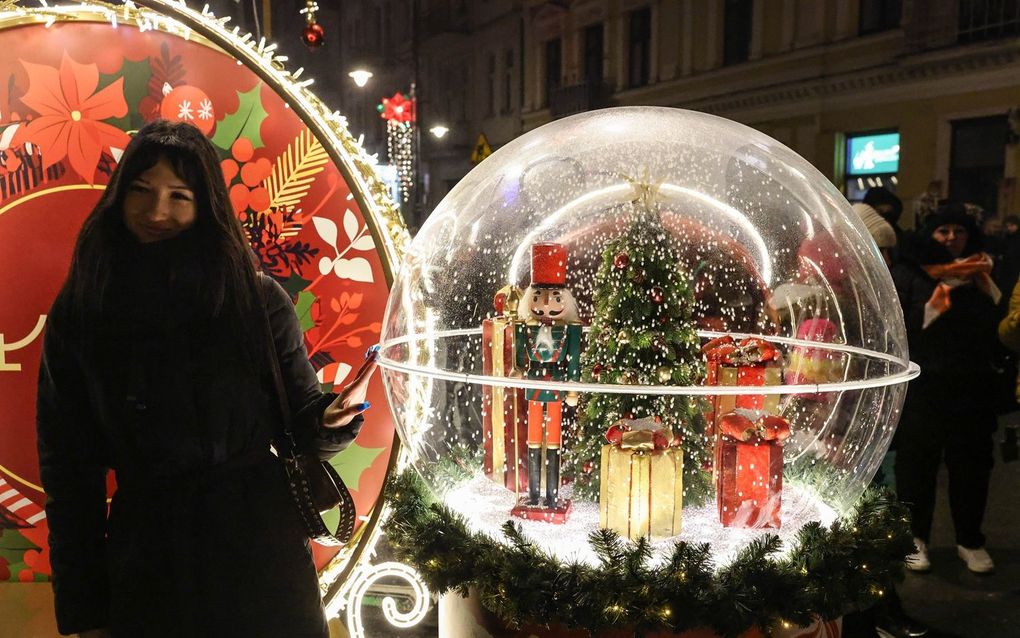
A woman poses next to Christmas decorations at a Christmas market in Lodz, Poland. Photo EPA, Marian Zubrycki
Christian Life
Browsing through shops around Christmas can be a distressing experience. Here in Finland, they have been invaded by an army of elves, polar bears — and unicorns. Nativity scenes, angels and little decorative churches commonly sold in this season have all disappeared.
The absence of anything related to a Christian Christmas is striking. But not only do we witness the absence of Christian products, but openly pagan “Christmas” magazines or calendars are being sold instead. The wonder of Christmas, the celebration of God’s holy gift to mankind, is in danger of being reduced to a commercial celebration of something vaguely pagan.
In an effort to maintain a religiously uncommitted stance, some schools prefer to avoid Christian content altogether.
This move towards a secular Christmas is unfortunately not limited to the marketplace. Even secular schools find themselves unsure about how to position themselves regarding Christmas. In an effort to maintain a religiously uncommitted stance, some schools prefer to avoid Christian content altogether.
Dangerous
Nonetheless, this is a dangerous move, even from an educational perspective. Christianity has shaped European culture for two thousand years. The birth of Jesus has been a powerful source of inspiration for countless artists, ranging from composers to painters, sculptors, and poets.
Most of European fine art has been built on our Christian heritage. Although the majority of Europeans do not confess Jesus as Lord, we have a wealth of traditions and songs that are, in fact, impossible to understand without knowledge of the first Christmas. And unless we want to raise a culturally illiterate generation to be easy prey for cultural invaders, we would do well to educate children on these matters. How else will they understand Christmas carols, the giving of gifts, and the presence of stars, candy canes, and wreaths?

Tolerance and neutrality are often quoted as reasons for the removal of Christian symbols or practices from the public sphere. Yet, isn’t tolerance the virtue that should enable a society to accept (and celebrate) the presence of Christianity? Would tolerance really urge believers to discard their feasts or traditions?
And as for neutrality, this is an unattainable idea altogether, since people will always build a society on values, whether they call them religious or not. As history and our present time reveal, state atheism does not equal state neutrality.
Distance
Many Western countries have been intentionally distancing themselves from their Christian heritage for the past decades. Thankfully, this tendency, which can be observed in schools and sales, does not accurately reflect the spiritual state of Europe. As recently reported, numerous young people are currently turning to the faith. This is delightful news — and yet it is quite unsurprising, when one considers their alternatives: the meaninglessness of atheism, the emptiness of materialism or the dark confusion of witchcraft and New Age.

In a society where freedom of religion has been used to promote societal atheism, we need to remember that we, as Christians, must claim our existence. We have a voice, and we have a celebration! And although paganism is threatening to darken this season, Jesus Himself has said that “light shines in the darkness, and the darkness has not overcome it” (John 1:5). May the lack of Christian witness around us in this season inspire us to work, pray, and shine!



Related Articles