

EU excludes two pro-life organisations from funding

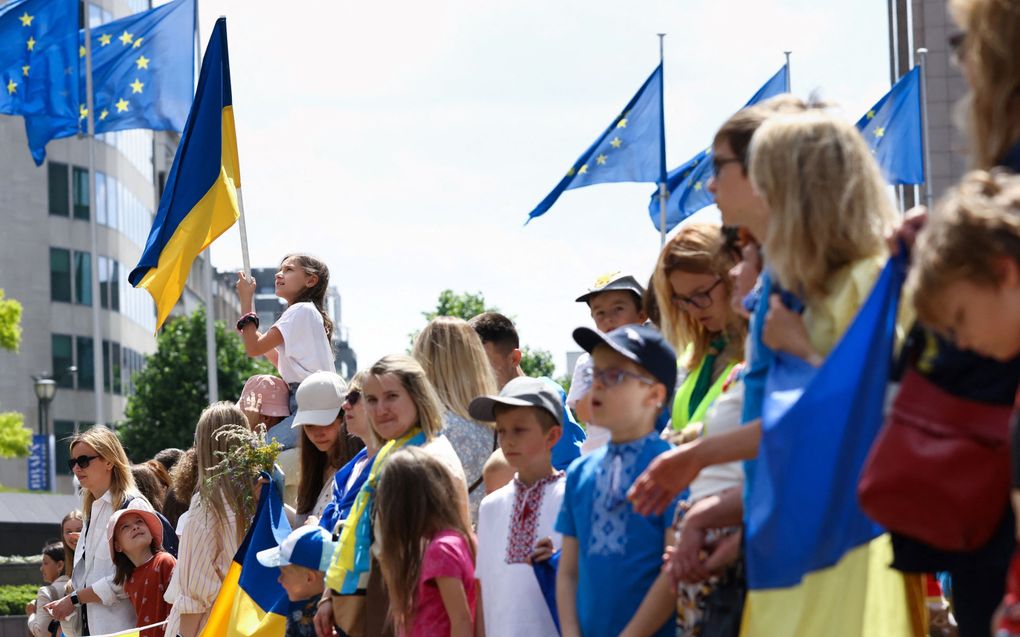
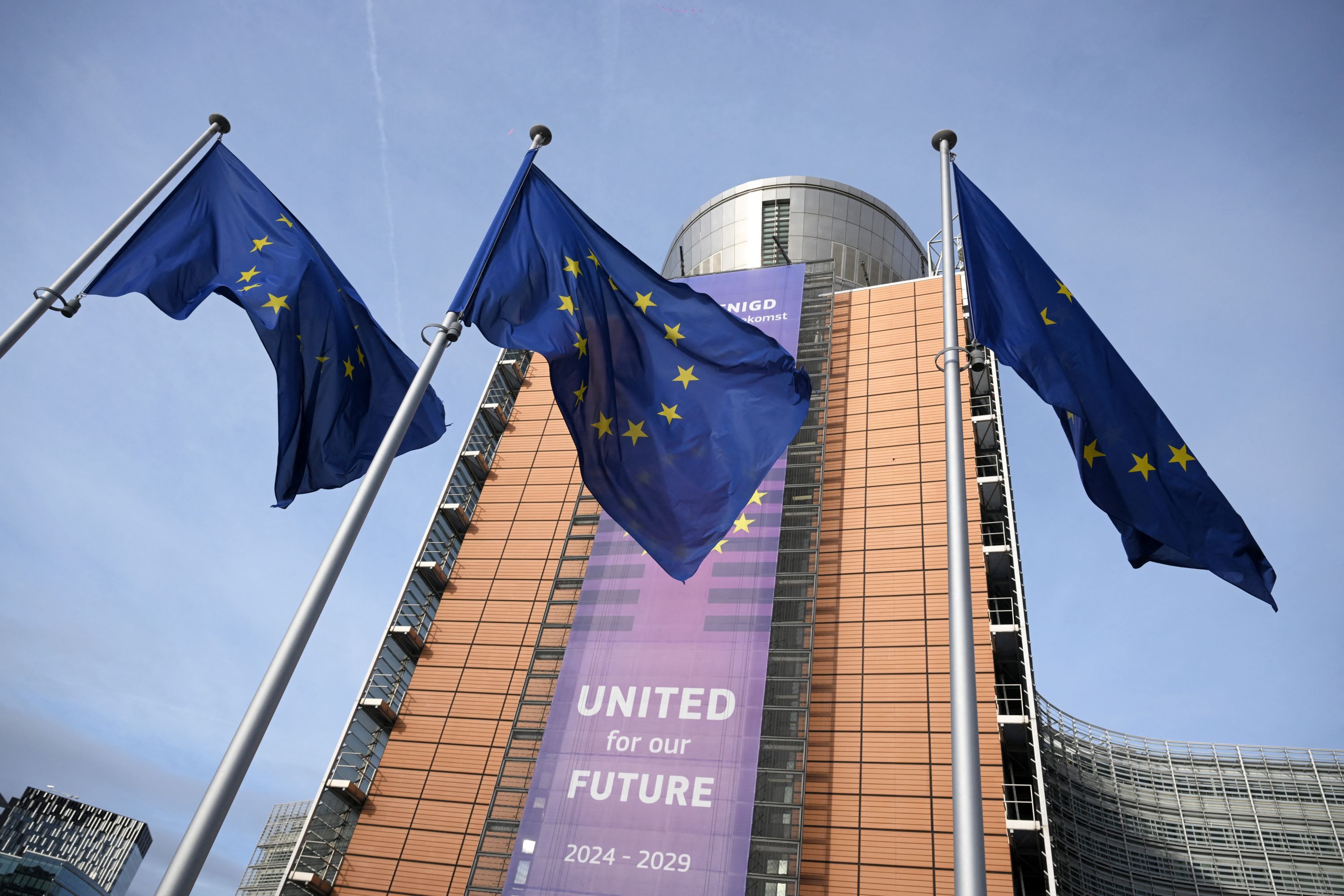
The European Commission is denying subsidies to two pro-family organisations. Photo AFP, Kenzo Tribouillard
European Union
For the Federation of Catholic Family Associations in Europe (FAFCE), defending traditional family values has been a central priority for decades. Now, the EU Commission finds that a problem and denies new subsidies.
Also the grants for the pro-life student movement World Youth Alliance (WYA) are blocked.
FAFCE, wrote in their latest newsletter that they have now been “excluded from all funding by the European Commission (EC) for alleged violations of equality measures and EU values.” In the call for fundings, FAFCE applied from mid-2023 to mid-2024 for funding for six EU projects in the “youth and child protection” category, and all were denied.
What were the reasons behind the EU’s rejection? According to the assessment from the EU Commission, the applications contained “limited information on gender disparities” that could limit the scope of “gender analysis” and “barriers to participation” that could be present in various groups. They also criticised the Catholic-based organisation for having “limited safeguards against discrimination and victimisation.”

The EU Commission also noted in FAFCE’s evaluation that their organisation’s proposals “contravene EU equality provisions” and contains “gender-sensitive language and accessibility.” Being in violation of two “categorical judgements” when it came to EU equality provisions included a 30 per cent deduction which ultimately led to a rejection of all funding, according to the FAFCE’s newsletter.
When it comes to being in violation against EU values, the EU Commission suggested that the proposals should contain clearer language on how various principles such as “human dignity, democracy, and equality” are implemented.
Ideological discrimination
FAFCE’s President Vincenzo Bassi considers the EU’s decision “ideological discrimination,” because the organisation defines family as being one man and one woman and possibly some children.
"The evaluation of European projects relies on unreasoned statements, based on preconceptions of the family model. The family-friendly approach is being challenged, despite the fact that inclusive initiatives, such as the planned outreach to rural and marginalized youth through family networks, are also positively evaluated,” he says to the Italian newspaper Il Foglio.
Amid the “demographic winter” that Europe is experiencing, he adds in an interview with El Debate, the continent insists on focusing on “gender issues that are framed in terms of equality, rather than on promoting the traditional family model.”
The project consulting firm, Theoria, which FAFCE hired to receive EU funding, discovered a strong likelihood of “ideological bias” in the Commission’s evaluations. For example, one evaluation speculates that FAFCE’s projects “may contravene EU equality provisions” or that there might be “gender disparities in participation”, even though this is in no way substantiated by the project proposals that FAFCE submitted.
Theoria found that in one project, six points were deducted, even though the evaluator did not detect any flaws. In another proposal, one evaluator noted that the criteria were met “very well” but found “a small number of flaws.” This decision resulted in a 30 per cent reduction in the score for a particular criterion, and the project did not meet the “minimum threshold for funding.”
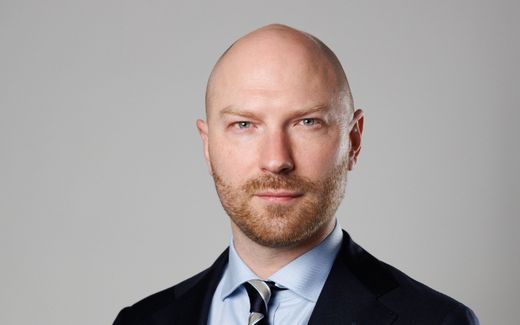
Head of Theoria, Hrvoje Vargić, added in the Italian Catholic newspaper Avvenire that the evaluations and their criteria are “hard to prove” and that it is difficult to verify that the evaluator(s) is biased.
However, one factor that they did discover was a strong indication of an implicit bias when it came to the EU’s evaluation of Christian and pro-life organisations. Vargić also says that the evaluators’ names are not publicly disclosed.
“These evaluations are very subjective,” he says.
Although FAFCE’s president and Theoria do find ideological motivations behind the refusal, Vargic notes that the EU Commission may have rejected the application based on other reasons too.
Recently, the Commission has received a high volume of applications requests for project funding. Although not officially verified, he believes that the use of AI is leading to the high number of subjective and low-quality evaluations that other organisations have received.
Vargić estimates that around 5 per cent of applications get their funding applications approved by the Commission. “The success rates are getting lower in the past three years,” he says.
World Youth Alliance
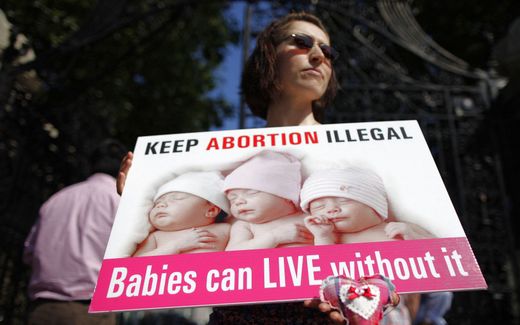
The FAFCE was not the only organisation that had had their funds denied by the EU. The World Youth Alliance (WYA) also saw their funding rejected on the basis of their pro-life views. The WYA campaigns for human dignity “from conception till natural death”.
In one section in the refusal, the evaluator noted in the project review letter that “the organisation mentions human dignity and sexual health education without describing its positions such as opposition to abortion, and comprehensive sex education, their emphasis on abstinence and natural family planning, and the fundamental idea that life begins at conception.”
Yet, the World Youth Alliance denies this claim and has fought back by publishing a letter from the Commission on why they were denied funding.
“We do not conceal our convictions. On the contrary, we are proud to affirm and promote the view that universal human rights belong to everyone and that they are grounded in human dignity that every person inherently possesses, unalienable from conception until natural death,” the WYA writes in their response to the grant review.
Disinformation
European Parliament representatives, MEP Bert-Jan Ruissen from the Netherlands and MEP Paolo Inselvini from Italy have demanded an explanation on why the World Youth Alliance’s review reports were denied funding on projects totalling 400,000 euros.
They wrote a letter in which they point out that they found “non-binding resolutions” on EU Parliament’s sexual and reproductive health and rights. The resolutions, they write, implied that they were legally binding, as if they were obliged to follow them.
Certain materials were also labelled as “disinformation” because it did not subscribe to a “comprehensive sexuality education model” or because the organisation promoted approaches on abstinence or natural family planning.
“Divergence from particular political positions of the Union is treated as if it constituted a breach of EU values, creating a dangerous precedent and potentially transforming Erasmus+ and Youth from instruments of inclusion and dialogue into mechanisms of ideological conformity,” they write in the open letter.

At the same time, they also detected the “alleged lack of contradictory perspectives or balance.” For example, EU-funded programmes such as Erasmus +, CERV, and DG SANTE are dedicated to promoting pro-abortion or LGBTQ policies without any “form of countervailing viewpoint,” they write.
“We would hence like to understand if the demand for “contradictory perspectives” is being applied consistently and coherently across programmes.”



Related Articles