

OSCE publishes rare guide to protecting Christians

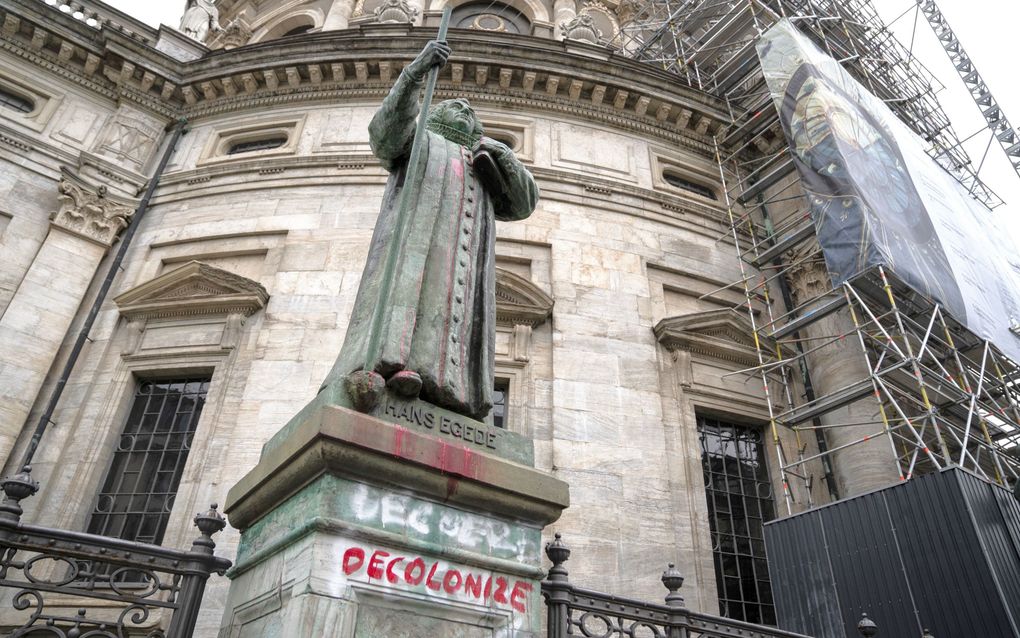
The statue of the Danish-Norwegian evangelist Hans Egede was vandalised with graffiti in 2020. Photo EPA, Liselotte Sabroe
Opinion
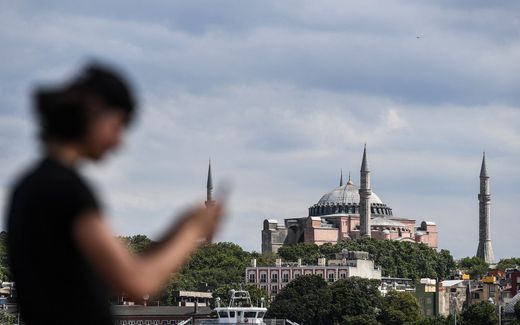
Europe extends as far as we can see church spires. That is, in short, the vision of the German Chancellor Helmut Kohl on Europe’s borders. In other words, Europe is Christian, and you can easily see where it ends.
Based on Kohl’s simple logic, it is understandable that the Organisation for Security and Cooperation in Europe (OSCE) has so far only written reports on combating Antisemitism and Islamophobia. After all, Judaism and Islam are vulnerable minority religions in Europe and could use official protection.
This summer, however, the OSCE also published a practical guide to recognising hate crimes against Christians. Apparently, this seems to be necessary in the 57 member states of the OSCE.
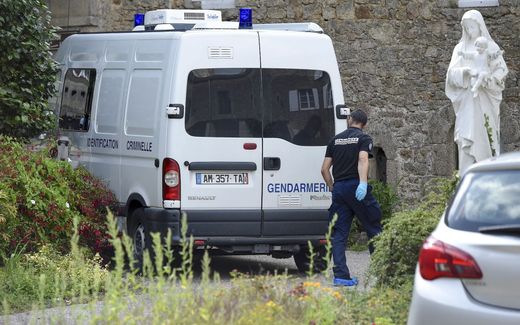
What is the problem according to this guide? Arson attacks on churches and the defacement of Christian monuments have happened. Still, the police usually do not record this as an ‘anti-Christian hate crime’. And if there is graffiti on a church, the caretaker often calls a cleaning company rather than the police. In short, we only see the tip of the iceberg.
Moreover (and now it gets a little more serious), governments are not always so sensitive to hate crimes against Christians. Christians may have built beautiful church towers in the past, but today they no longer always fit into the “narrative” of the ideal national identity, says the OSCE.
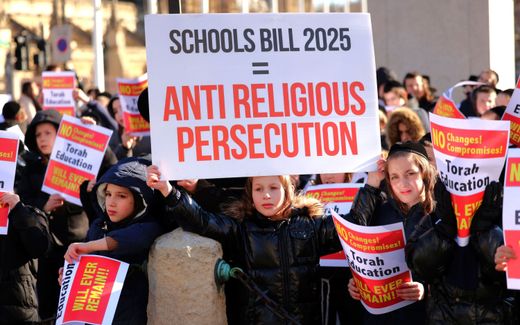
That is, of course, a sharp observation. Christians have worked hard over the centuries to build societies. But today, they sometimes find that the values they hold dear are viewed with distaste. Think of political discussions about marriage, family and sexuality. This feeling of being unwanted leads to self-isolation among Christians and to self-censorship, according to the OSCE.
The OSCE report emphasises that governments have a duty to guarantee religious freedom. The pluralistic society is the central premise of this guide. For some Christians, that plurality may not be ideal, but it remains the reality nonetheless.
Based on this principle, the OSCE makes recommendations on “interfaith dialogue” by religious leaders themselves, as well as promoting greater awareness among civil servants and media representatives. There is also a whole page of recommendations to parliaments, such as holding a hearing on this topic and the OSCE’s offer to scrutinise existing legislation.
The OSCE is thus a rare (and perhaps unique) example of an international organisation that comes up for the protection of the quiet and peaceful life for Christians. International organisations often follow the French line of what is known as laïcité even more closely than national governments, in which religion is always private and therefore invisible.
Let’s not forget that this guide also has something to say to Christians. After all, they also commit hate crimes against each other. In Eastern and Central Europe, small Protestant congregations may struggle to find a suitable venue for worship in cities where Eastern Orthodox or Roman Catholic populations are in the majority. And also in my own country, the Netherlands, I sometimes see how different Reformed groups can make things difficult for each other.
And that is another recommendation that we can add to the report ourselves: Christians in Europe should also leave each other’s church spires intact.




Related Articles