


Endocrinologist: medical transitions for minors have dangerous side effects

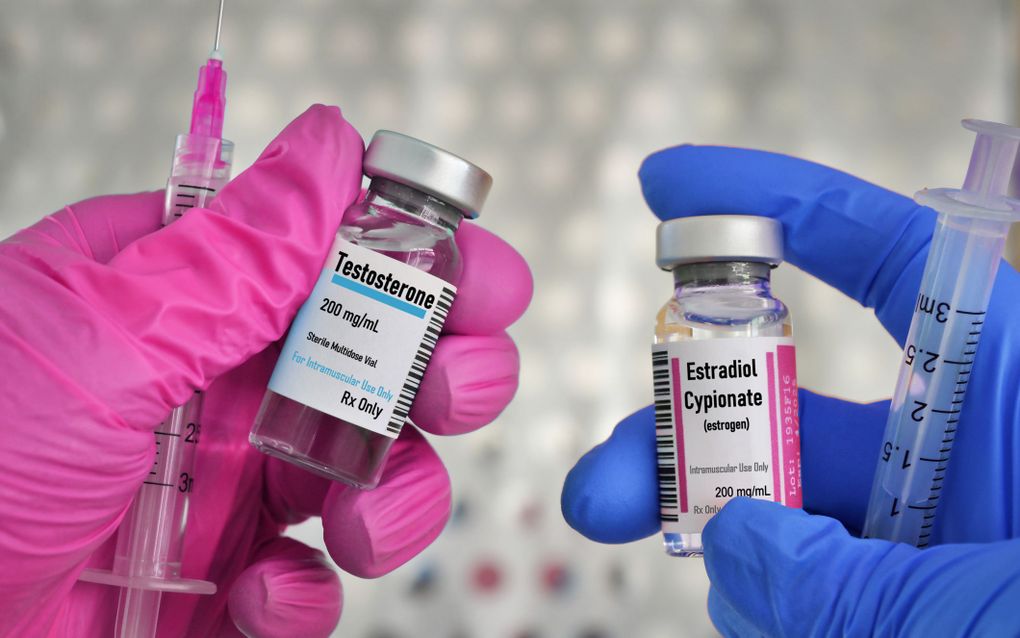
Recent studies indicate that puberty blockers and cross-sex hormones have detrimental side effects when children undergo medical transitioning. Photo iStock, MargJohnsonVA
European Union
As a teenager, Keira Bell struggled to come to terms with her gender identity.
At 16, she started the process of transitioning from female to male. Doctors prescribed her puberty blockers, which eventually led to her experiencing hot flashes and brain fog. Bell recalled in The Christian Institute that the brain fog led her to not being able to think clearly about her gender dysphoria.
Her medical team had also put her on testosterone and later scheduled her for surgery. After going through the surgical procedures, she experienced nerve damage in her chest area. If she were able to have children, breastfeeding would be out of the question.
Now almost 30, Keira has regretted her transition and has been on a years-long campaign to raise awareness of the dangerous health consequences of medical transitioning in childhood and adolescence.
Bell eventually took her case to the High Court in the UK, and in 2020, the Court ruled in her favour against the NHS Gender Identity Development Service. The judges ruled that it was unlikely that children under 13 could be capable of consenting to hormone blockers and also cast doubt on whether teens under 18 could do so.
“A lot of girls are transitioning because they’re in pain, whether it’s from mental health disorders, life trauma, or other reasons. I know what it’s like to get caught up in dreaming that transitioning will fix all of this,” she recounts in The Christian Institute report.
Dutch Protocol
The Dutch-based Bible research institute, Bijbels Beraad, wrote a summary of an over 400-page US report that highlights the concerns and long-term effects of medical transitioning in childhood.
It includes data from the US Department of Health and Human Services, which has published a review summarising all available literature when it comes to medical transitioning in children. The report criticises the current standard in treating gender dysphoria in children, which is the Dutch Protocol.
While medical professionals defend that these procedures are "necessary," many do not take into account that many of these adolescents have psychiatric problems that are in need of professional help.
It is also the case that these adolescents can have the capability to shift their thoughts and feelings throughout their development. In most cases, gender dysphoria in youth often resolves on its own. On the other hand, “There is no way to know which patients will continue to experience gender dysphoria and which will accept their bodies,” the report says, which was quoted in Bijbels Beraad.
In the “history” section of the report, it details that the medical treatments used for adolescent transitioning have never been proven safe in children. It is a normal course of action to approve a treatment for children once it is proven to be safe for adults. However, this is not happening here, the Bijbels Beraad says about the US-based report. Such treatments, Bijbels Beraad explains, have proven to be irreversible, often resulting in infertility/sterility and vascular and heart problems, as well as cognitive deficits.
Irreversible consequences
Quentin Van Meter, a veteran paediatric endocrinologist in the US, has spoken out about the dangers of medical transitioning in children. He agrees with the US report’s consensus that these treatments are more harmful than we realise.
When you kill natural puberty and replace it with an artificial one, it doesn't match the body, he says.
“The body says, 'I don't know what to do with this high level of oestrogen as a biological male.’ What happens is that my heart is prone to disease. I'm prone to cancers. I have a stroke risk. I'm going to be totally infertile, and I will have no sexual function whatsoever”, he says about the process. “Because by the time I've fried my testicles or ovaries by suppressing pituitary hormones first and then putting cross-sex hormones in, they will not come back to life,” he notes.

Van Meter also explains that using puberty blockers can also interfere with a critical window when it comes to reaching peak calcium levels to achieve maximum bone density.
Calcium is a very necessary element. It’s a super important chemical for the body, as it is responsible for cellular interconnections and muscle constriction and for insulin action, he says.
But it is also important in building the bones and preventing bone disorders later in life. Calcium is stored in a bank within these bones. However, if puberty-suppressing hormones are used during adolescence, these stores can be depleted, where osteoporosis, fractures, and hip fractures become a real risk.
“If you're 85 years old, osteoporosis is not uncommon, but it's not supposed to be common in adults who are 40 years old,” he says.
It is not only the body that suffers in juvenile medical transitioning. The brain also takes a hit, he explains.
He mentioned an article in the Journal of Clinical Enterology and Metabolism, a leading voice among those in endocrinology. The journal reports about the presence of early dementia in patients who had no functioning gonadotropin-releasing hormone. “If this hormone, also known as GnRH, is disordered, by nature, those patients have early dementia,” he says.
While studies are now citing the deleterious effects of the hormones used in medical transitioning, the long-term effects of using these hormones are still unknown.
“It's going to take a long time. It's going to take a generation, I think, which is dangerous, because think of the number of thousands of kids that are going to be adversely affected while we wait for long-term data.”
He also predicts that several legal lawsuits over these detrimental effects will happen over the next several years, some of which are starting to come to fruition in the US.
The Slippery Slope
The acceptance of using puberty blockers and cross-sex hormones in children with gender dysphoria did not happen overnight but gradually over time, he says.
In 1993, Van Meter remembers treating a thirteen-year-old male who wanted to transition to a female. His parents affirmed his decision to transition, and they asked Van Meter for his advice on what could be done.
Van Meter says that the situation caused him anguish. Such a move at that time was so rare that he had to contact experts across the US to give him advice on what could be done for the boy. After Van Meter consulted several experts, his parents decided to sign consent forms to have him get treatments at his private clinic. After six months’ time, the family moved, and he never saw the boy again.
Since then, he has witnessed a slippery slope of the medical community’s acceptance in approving transitions among adolescents. He mentions a 2004 article that cites a child with “trans child identity disorder". Around that time, research was quietly being conducted on transitioning through the use of cross-sex hormones.
While serving as a panel member during a regional paediatric endocrine course, Van Meter mentioned a clinical psychologist who presented to the attendees a story of two youths who underwent medical transitions that were later deemed “successful” in treating their gender incongruence.
He realised that the case reports, as presented, seemed familiar and scripted. Van Meter had questions and pressed the psychologist on the panel on whether these children were actually real. “Where are these children now?” He asked. The psychologist had no answer.
Now that much of the medical community is in full acceptance of medical transitioning in adolescence, Van Meter says that guilt is often the driving force behind the acceptance, as many believe that these children will eventually commit suicide if they are not on a path toward transitioning. However, this is a lie, he says.
“Parents inherently carry some level of guilt, and then they are told that their child will kill themselves. We have all the statistics. And it's an outright lie. The suicide rate is not more or less in those kids that have been put on puberty blockers.”
While there is evidence that the suicide rate remains unchanged, a Finnish study also showed that overall mental health became worse after hormonal and surgical procedures. It rose from 9.8 percent to 60.7 percent from male to female transitions and from 21.6 percent to 54.5 percent from female to male procedures. The study also observed that the increased suicide risk from adolescent gender care procedures was from their own “psychiatric conditions” and not due to gender dysphoria.
When it comes to youths who are struggling with gender dysphoria or their identity, Van Meter emphasises that the cure is natural, uninterrupted puberty.
“Those struggling children are trying to escape. They are hurting so badly that they try to escape their current existence. They may eventually be gay or lesbian, but they are not born in the wrong body,” he says.
This is a two-part series. Part two features Dr Julie Maxwell and what the Christian community can do to better support youth who are questioning their gender identity.