


The slippery slope of framing abortion as a fundamental right

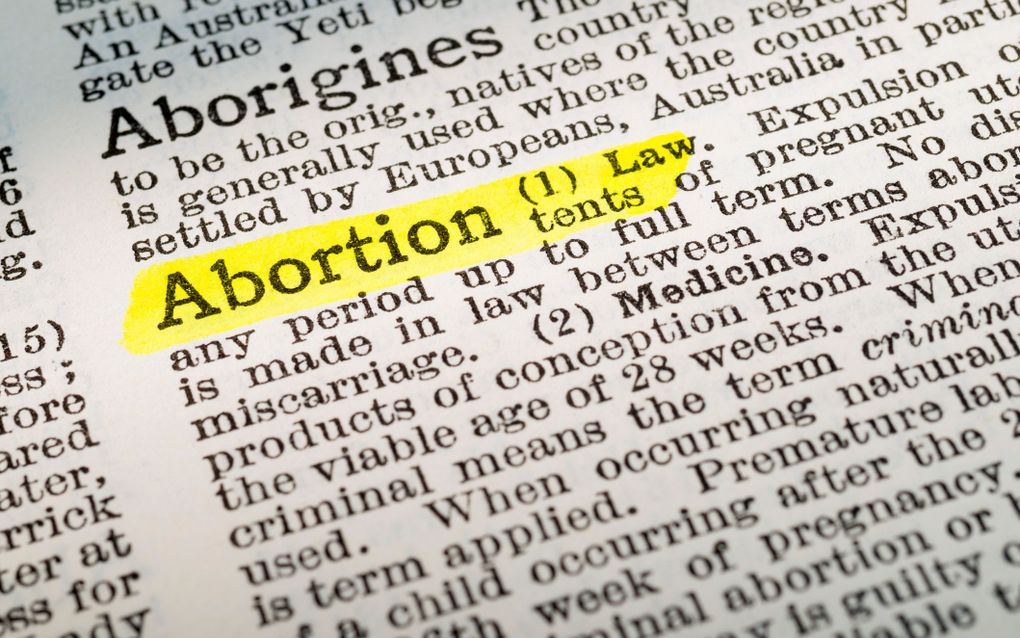
Photo iStock, stockcam
European Union
Earlier this year, the pro-abortion organisation, My Voice, My Choice posted a YouTube video that called on supporters to protect abortion rights.
One of the largest pro-abortion lobbying groups in EU Parliament, the organisation’s interviewer featured Valérie Hayer, who is president of the EU party, Renew Group.
The interviewer asks Hayer, originally from France, how it feels to have abortion now enshrined as a right in her nation’s constitution. After Valerie commended her government and President Macron for their efforts, she says further: “We see in every country where the far-right, populists come into power. And even before coming into power, they are threatening and attacking women’s rights. And the right to abortion is a key right for women. This is the condition of freedom.”
Hayer and her EU party are not the only actors to perceive abortion as a “key right” and a “condition of freedom.” Rather, they are part of a growing chorus of those within the EU that are framing abortion as a fundamental human right in their agreements.
Although abortion is not considered a “fundamental right” in the EU, efforts to change that are getting closer, and these actions have not always been enforced in the name of “soft power”.
Much of the events from abortion being a standalone issue to later joining a larger umbrella of Sexual and Reproductive Health and Rights (SRHR) have occurred within the last decade. Yet, abortion and its eventual consolidation within other human rights, can be traced to policies passed decades ago.
The road to SRHR
According to an academic paper entitled: "Towards a common EU-abortion policy? The European Parliament’s resolutions on abortion as a ‘human rights issue,’” the attempt to redefine abortion can be seen as far back as the 1990s, according to its authors, Lourdes Peroni and Marta Bucholic. It was then that the EU’s Court of Justice issued a call to study the “links between abortion and the concept of services in community law.”
Around the same time, the European Parliament (EP) had also reported global developments within various resolutions that outlined “sexual and reproductive rights”. Such resolutions presented abortion as “affirming a woman’s right to self-determine over her own body.” Considering the findings, the EP proposed that member states “legalise induced abortion within certain conditions.”
In 2002, the EP voiced concerns about discrepancies in contraceptive use and “adequate sexuality education” in applicant countries. These gaps in oversight got the attention of anti-abortion groups which criticised the EP’s stance as a move to legalise abortion in candidate countries.
Before the 2004 EU enlargement, the EP approved a resolution that articulated SRHR rights with abortion being introduced as a part of “women’s reproductive health and rights risks and prevention.” The document alerted member states on the risks of unsafe abortions, steps to decrease abortion incidence as well as highlighting the psychological and physical risks associated with abortion, even after advice.
Then came the amendments to landmark agreements that were originally introduced in the 1990s, the authors point out. These would later forge the foundation for the EU’s perception in abortion as a “fundamental right.”
After the Treaty of Lisbon came into force in 2009, Article 2 of the Treaty of the European Union put abortion under the category of human rights. The same was seen within the EU Charter in 2000. Fast-forward to 2013, the SRHR resolution took on a greater role.
The initial report entitled the Estrela Report (named after Edite Estrela, a Portuguese MEP of the Socialist Party) was struck down after fierce debate. Another motion soon followed that provided member states with an outline of competences rather than promoting or building on SRHR rights themselves.
Form of violence
That all changed in 2021 when an SRHR resolution that fell under Women’s Health Risk Prevention morphed into “safe and legal abortion care” within women’s health and rights. They also concluded that SRHR are now “human rights” and must be observed by EU member states that are in line with international human rights standards such as “right to life, equality, and freedom from inhuman and degrading treatment, and others.
Any violations within the umbrella of SRHR rights can be seen as a “form of violence against women” the EP concludes. Efforts that inhibit access to safe abortions are compared with “torture, humane treatment and gender-arbitrary killings,” especially when a death is involved.
The resolution also incorporated a “privacy lens” where the basis for SRHR should guarantee the “right to choice and autonomy over a person’s body.” Abortion is also seen as linked to rights within health, privacy as well as non-discrimination. Thus, the EP advised that member states should “decriminalise abortion and remove obstacles to legal abortion.”
States must also review their own laws and align them with international human rights standards when it comes to abortion at request in early pregnancy and when the woman’s life is endangered. Such a resolution became a “political trigger” by prompting member states to act, the researchers in the report conclude.
Although the EP left the decision on abortion rights to member states, they continued to take centre stage when it comes to “violations” and “backsliding on abortion access”. It has also been the case that these chastisements are timed whenever an EU state or another Western state passes legislation that threaten the “human right to abortion”. For example, the topic of abortion was brought up in debates just before the EU adopted a 2022 resolution that confronted gender equality concerns.
The resolution’s passage also came at the time when Hungary passed a law which required women to listen to the foetus’s heartbeat before an abortion. The EU stated to Hungary that its “heartbeat law” breached women’s rights and EU values.
What is more, when the US Supreme Court overturned Roe vs. Wade, The EP called to enshrine abortion rights in the EU Charter of Fundamental Rights. The right to abortion was also added the Universal Declaration of Human Rights, reiterating “the right to safe and legal abortion” which is stated in Article 7 in the EU Charter, the report explains.
However, despite the EP’s call to enshrine abortion in the EU Charter, the Charter remains unchanged, as the EP cannot pass legislation on its own.
Centralisation and confusion
Although it is important to emphasise once more that abortion is not yet considered a fundamental human right by the EU (yet), it is the EU’s imposition of its values that remains problematic. When these values are put down on paper, they often come with vague and often incomplete definitions.
Such a phenomenon can be used to an institution’s advantage, creating further confusion among the general populace. What is more, many EU institutions are asking for more leverage in various institutions, which in turn, fuels disconnection from what is really going on.
Despite much resistance, the road to reverse the increasing encroachment of abortion in international policy is an ongoing battle. Yet, many are hopeful that more will fight against what is happening behind closed doors.
When abortion rights become international human rights
It is not just the EU that is interfering with its member states on the “right of abortion”. According to research by Alliance Defending Freedom International, UN entities such as the General Assembly and the Human Rights Council have created a rise of resolutions or recommendations for expanding the right to abortion on their participating states.
Meghan Grizzle Fischer points out in “The Rise of Faux Rights: How the UN went from recognizing inherent freedoms to creating its own rights” that while these documents cannot dictate international law, these “soft laws” may eventually go on to create binding regulations.
She also warns that whenever these documents are ignored or are allowed to duplicate, new rights can form. Many UN entities also uplift “sexual and reproductive rights” as a core right along with “the right to abortion” despite not being found within international law.
Adding further, the United Nations Population Fund see themselves as a “leading UN agency for delivering a world where every pregnancy is wanted, every childbirth is safe, and every young person’s potential is fulfilled.”
In fulfilling that mission, they outline the need for a “range of sexual and reproductive services” such as “safe abortion care” and “emergency contraception.” They have also called on countries to change their positions on abortion and have deployed “delegations” at economic and social commissions. Such a mission has also created the need for “sexual and reproductive rights advocates,” the ADF report writes.
What is more, other entities of the UN have expressed support for aligning abortion with international human rights laws.
The Special Rapporteur on health back in 2017 (Dainius Pūras) said that “criminal laws and legal restrictions on sexual and reproductive health interfere with human dignity.” Pūras went on further to say that criminalising abortion “is one of the most damaging ways of instrumentalising and politicising women’s bodies and lives.”
The UN has also set up a Universal Periodic Review (UPR) mechanism in ensuring that states are compliant with their human rights obligations and recommend further action if any violations have occurred.
For example, UN Member states have also been known to “chide” other states into changing their national laws so that abortion can be fully legalised.
Chile has received recommendations to change their abortion laws by Belgium, France, Germany, and others. Slovenia and Norway have “chided” fourteen countries and the Netherlands has pressured at least nine into changing their laws, Grizzle reveals.