

Ukraine's corruption scandal has a strong spiritual component


Ukrainian lawmakers protest against corruption earlier this year. Photo Canva.com, AFP, Andrii Nesterenko
Christian Life
Ukraine is entangled in a corruption scandal. It is easy to complain about this, but Christians also have another calling, says Oleksii Blyzniuk.
By now, there are probably very few people who have not heard about the corruption scandal in Ukraine. President Volodymyr Zelenskyy and the Ukrainian authorities are facing a large-scale corruption scandal in the state energy sector, at the centre of which is the state enterprise Energoatom.
According to the investigation, the scheme involving bribes and kickbacks amounts to approximately 100 million dollars. The Ukrainian authorities dismissed two ministers — the Minister of Justice and the Minister of Energy — due to suspected involvement in this scheme. President Zelenskyy also promised a comprehensive review of the management of strategic energy enterprises, the implementation of audits, and the renewal of leadership.
However, the key point here is not merely changing personnel, but restoring trust, creating a system in which abuses are impossible or reduced to a minimum. This scandal is not merely a financial or political matter — it carries deep moral and spiritual significance, especially during wartime, as the country faces trials not only with weapons but also with trust in state institutions.
Community
When funds intended to protect infrastructure or support citizens end up in the pockets of individuals, this leads to the devaluation of human dignity, the erosion of trust, and the demoralisation of the nation. Corruption undermines justice and destroys community. And when it occurs at the highest levels of government, it also undermines statehood itself, as it fundamentally erodes trust in public institutions.
All of this enables the enemy to wage war not only on the physical battlefield with weapons, but also to open an additional informational front that further destabilises an already weary Ukrainian society by exploiting internal weakness.
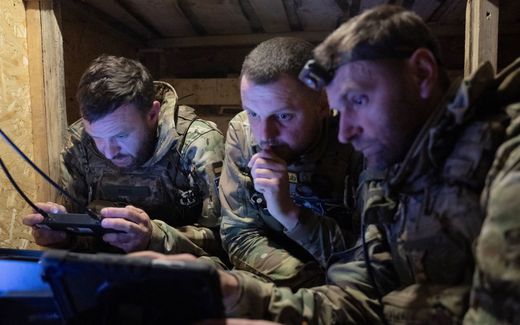
Especially from a Christian perspective, corruption is not just a violation of the law, but also a serious sin of deliberately robbing one’s neighbour. As one statement from Christian associations notes: “Corruption is a sin, and during wartime it is not merely a violation of state laws but also a moral crime against our defenders and our entire people.”
Responsibility
In the light of the Gospel, we see that Christ teaches: “There is nothing concealed that will not be disclosed, or hidden that will not be made known” (Luke 12:2). This is an important principle that can also be applied to those who hold power. Those endowed with authority must also understand that they walk before God and bear responsibility to Him, whether they like it or not. It is no coincidence that Solomon —being a king and holding the highest political office of his time— teaches: “The fear of the LORD is the beginning of knowledge” (Eccl. 1:7).
“We appeal to all citizens: let us not allow corruption to divide us or distract us from our main goal”
Christian communities in Ukraine have already responded. The All-Ukrainian Council of Churches and Religious Organisations (AUCCRO) issued a statement in which representatives of religious communities expressed their “deep sorrow” over the reports about this corruption case. In their statement, they emphasised: “We appeal to all citizens: let us not allow corruption to divide us or distract us from our main goal — the preservation of our state, its independence, and the achievement of victory over the enemy. ”

AUCCRO also demands that those guilty be held accountable “regardless of their positions or previous connections,” with the purpose of “healing the wound that has been inflicted, restoring trust, and showing that the state defends truth and justice. ” Thus, the Christian community is not merely acknowledging the fact of corruption — it is drawing attention to its deeper consequences for society and calling for responsibility.
Serving
Considering the church’s tradition, we can identify several key aspects. First, the ministry of governance and leadership must be guided by the principle of “serving,” not “ruling for one’s own advantage” (Matt. 20:25–28). Corruption reflects the opposite movement: authority becomes a means of personal enrichment, and the resources of service become instruments of self-consumption.
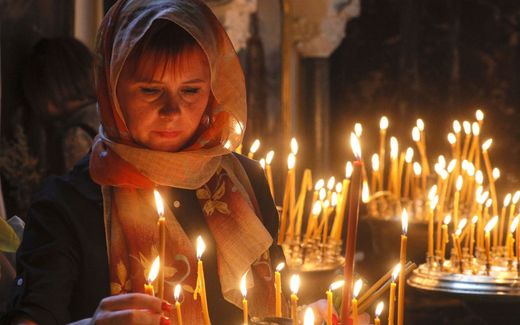
Second, in the context of war —when not only territory but human life itself is at stake— moral integrity and the effectiveness of the system acquire extraordinary importance. The loss of resources due to corruption means the loss of opportunities to help defenders and citizens suffering from shelling, power outages, or weakened infrastructure.
Third, for the Church and believers, this is a call to self-examination: the question is not only “What is the state doing?” but also “Am I, as a citizen and as a Christian, actively seeking the truth, standing for justice, and refusing to close my eyes to evil?”
Faith and works
For the Christian community, the corruption scandal carries several practical implications. First, believers must pray and act for justice in society — for example, by supporting transparency initiatives, participating in civic processes, and speaking out with moral conviction.
The Church should be an example of how one can live honestly and openly before God and people.
Second, the Church can stand at the forefront of shaping a culture of responsibility, openness, and service — reminding everyone that faith and works must go hand in hand (James 2:14–26).
Third, this situation offers an opportunity for witnessing: when society observes a crisis of statehood, the Church must not only be a critic but also offer an alternative. The Church should be an example of how one can live honestly and openly before God and people.
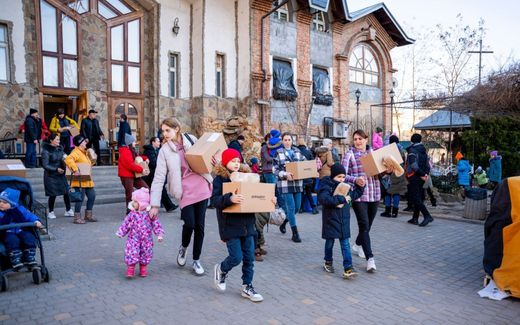
Thus, this scandal has a profound spiritual dimension. The Christian worldview reminds us that truthfulness, justice, and service are not optional virtues but essential reflections of God’s character among people.
The response to this crisis must not rely solely on temporary governmental decisions. Society itself must work to restore trust. Time will tell how this story will end, as it appears to be gaining momentum. In any case, for the Church and for Christians in Ukraine, this is a good opportunity to remind themselves and those around them that every person, regardless of their status, must live first and foremost before God.



Related Articles