


Dutch pro-life volunteers face arrests in abortion centre ‘buffer zones’

Photo iStock, mirsad sarajlic
Western Europe
For one woman in Utrecht, Netherlands, little did she know that her mere presence would be enough to land her in prison. Not once. Not twice. Six times.
Each time she was jailed, she was forced to strip down, leaving her with just a fleece towel to wrap around herself until her release six hours later.
The woman in question was representing the pro-life organisation Kies Leven (Choose Life) and handing out leaflets that showed a week-by-week glance of a baby’s developmental milestones in the womb.
Yet, police continued to view activities such as hers as unlawful because she was “acting alone” and in violation of a city’s 200-metre buffer zone near an abortion centre. According to Kies Leven’s director, Kees van Helden, this has not been the only arrest that has occurred within his organisation.
Within the last couple years, other volunteers who had held signs or handed out leaflets from Kies Leven have been arrested in major cities within the country. CNE previously reported multiple arrests within buffer zones in the UK.
Now, these crackdowns are making their way to the Netherlands. In addition to what happened in Utrecht, Kies Leven has had to deal with arrests made in Amsterdam, The Hague, Rotterdam, and Den Bosch, van Helden says.
In addition to the arrests, they have also had complaints from the abortion centres themselves. He says that their A6-sized leaflets giving a week-by-week description of a baby’s development have had the power to change minds, often at the last minute.
Van Helden says that he has seen several women cancel bookings and walk out of the clinic after reading the leaflet. In one instance, they had seen as many as five women change their minds on the same day.
It has also been the case that they have had to help women get away from dangerous situations. One 28-year-old woman in Rotterdam was forced to have an abortion by her husband. The man threatened her that if she came back home, she would have “two bullets in her belly". Despite her fears, she cancelled her abortion, and Kies Leven was able to find a safe place for her.
“We see that women are not safe. Every week, we change women who want to have an abortion. If you have an abortion, it does not take away the pain,” he says.
And whenever women change their minds and walk away, the clinics become angry and often call the police to escort the volunteers. After the police arrive, the volunteers are accused of causing a disturbance despite the fact that they are in compliance with buffer zone regulations, van Helden notes.
He explains that each city has different laws when it comes to groups who demonstrate near abortion centres. In Utrecht, for example, pro-abortion demonstrators can stand within 10 metres from an abortion clinic. Groups are required to stand 200 metres away.
Someone who protests alone is not subject to protest laws but is protected by the fundamental right to freedom of speech. And that right applies anywhere on public roads in the Netherlands. At the same time, the Netherlands currently has no nationwide buffer zones regarding protests near abortion clinics. It is the case that the creation of buffer zones has been left to the cities to enforce.
What is more, the laws surrounding these zones are often ambiguous and not stipulated in writing, which leaves ample room for interpretation. Since municipalities are left to create and enforce their own regulations, such a situation can leave police and the courts to create varying or incorrect interpretations regarding each case.
For example, in Amsterdam, demonstrators are allowed to protest if they are not within sight or hearing from their “intended target” according to a previous report by CNE.
In Arnhem, anti-abortion demonstrations can now occur no closer than 50 metres. In Rotterdam, protestors cannot protest in front of a clinic but only on the other side, such as across the street.
However, in the case of a one-person demonstration, protesting in front of a clinic is allowed because it is covered under the fundamental right to freedom of speech in the Netherlands, van Helden notes.
More recently in Zwolle, city authorities want to see greater restrictions on demonstrations in front of abortion clinics. They are currently mulling over a 500-metre buffer zone around clinics and having one-person protests to be registered with the local council, according to an Oost report.
Van Helden also says the group size has proven to be a factor in the arrests. It is now the case that police have particularly targeted one-person demonstrations.
Despite contradictory laws in enforcing city-wide buffer zones, he explains further that they ensure that their activities do not pose a threat to those seeking abortion services. All demonstrations have stayed silent and have only involved holding up signs or handing out leaflets. When leaflets are passed out, volunteers are to ask permission if they want one. Women en route to the clinic can then read the literature on their own and make their own decisions.
As in the case of one demonstration in Utrecht, the city’s mayor, Sharon Dijksma, refused Kies Leven’s request to demonstrate on the sidewalk side of the abortion clinic, Vrelinghuis. Kies Leven also proposed alternative locations that were within the current city regulations. That is, those not directly in front of the clinic but in compliance with a 2025 ruling that the “alternative location is within sight and earshot of the clinic".
However, Dijksma refused all of Kies Leven’s proposed locations and required them to demonstrate at a location further down the road – 200 metres away and facing another street. The city concluded that the original locations would offer too little space for visitors to access the clinic and would invite confrontation with demonstrators.
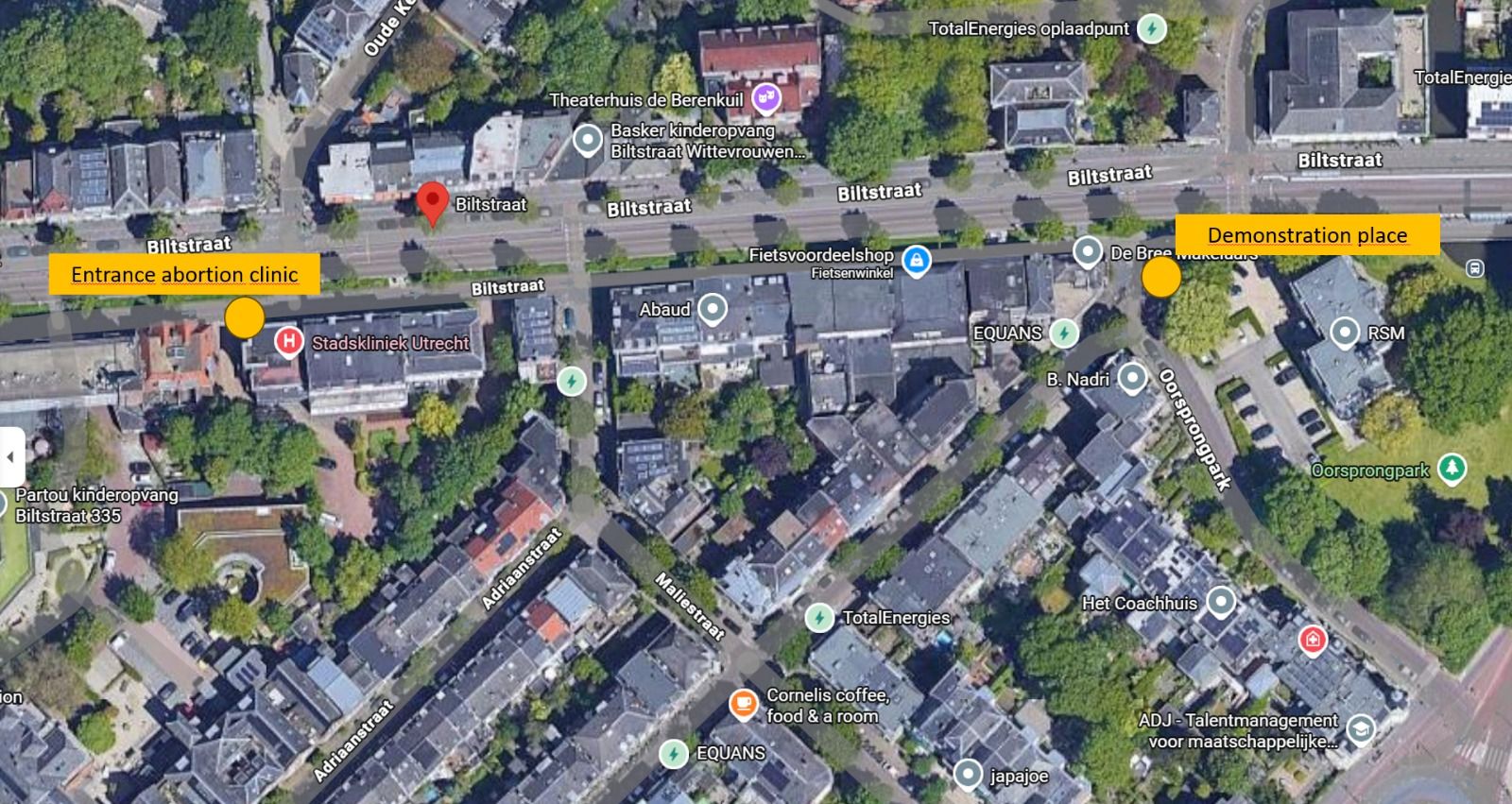
“Once again, I am taking into account in my considerations that your demonstration appears to be primarily aimed at addressing patients on their way to the clinic and does not seem to be directed at the Vrelinghuis itself,” she says.
The city also ruled that Kies Leven’s proposed locations would also run counter to current traffic regulations and would no longer be considered “safe for traffic” due to the layout of the street. They had also designated the newly proposed area for counter-demonstrations, as Dijksma believes this is “relevant because your demonstration has consistently attracted a counter-demonstration for some time now".
The moment the police act against one-person protests, this is because of the observed behaviour on the basis of the General Local Ordinance (APV). But there’s more. Van Helden explains further that authorities have been quick to arrest those within his organisation but not opposing groups who might pose as a nuisance to his volunteers.
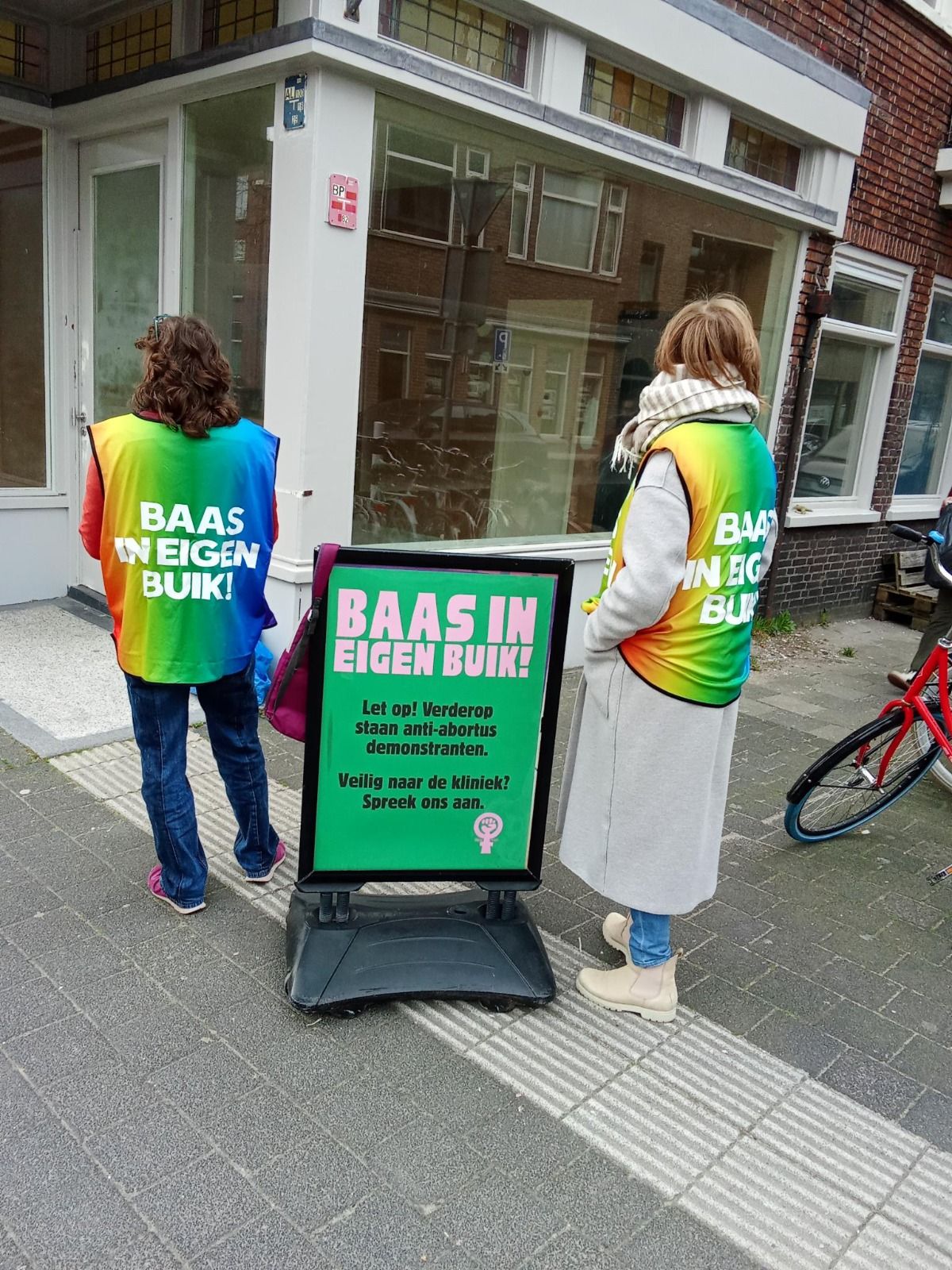
As in the case of Utrecht, demonstrators from the pro-abortion organisation Dolle Mina were allowed to protest near the abortion clinic, approximately 90 metres away on the clinic's side of the road.
However, according to the revised regulations from last year, they are not allowed to be in front of or near the clinic. Yet, Vrelinghuis has refused to do anything about their presence, van Helden says. Kies Leven captured the Dolle Mina protestors in front of the clinic on video, but neither the clinic nor the police have taken action.
What is worse, van Helden notes, is that whenever their volunteers have been arrested, police are quick to cancel those arrests just before the summons are sent to the municipal courts. After this happens, the police records show “not guilty".
“I hope one case will go to the court. That’s what we hope. Every time they cancel it, they know they’ve got a problem,” he says. And when one arrest does make it to court, he hopes it will send a message on the right to demonstration in the Netherlands.
In the Netherlands, the freedom of demonstration is a constitutional right. However, many cities and their authorities are not enforcing it correctly. And whenever the right to demonstrate is encouraged, there is a preference towards institutions whose interests are aligned with pro-abortion views, van Helden explains.
“I find it a similar climate as in the UK and everywhere else.”
Since the arrests, van Helden says his organisation has been forced to find other ways of sharing the pro-life message. He has now purchased a small van that will feature Kies Leven’s logo and will be parked in public parking lots near clinics.
“No law will forbid that,” he says.
A request for comment
A spokesperson for the Municipality of Utrecht (Gemeente Utrecht) responded to CNE’s questions regarding their decision to move Kies Leven’s location. Lisa den Oudendammer from Gemeente Utrecht states that in line with the ruling made in 2025 (Sinds de Raad van State op 3-12-2025 (Uitspraak 202300010/1/A3), "visitors to an abortion clinic should be able to reach that clinic as unhindered as possible; this means that demonstrations and one-person protests may not take place in the immediate vicinity of the entrance to the abortion clinic."
In line with that statement, 'one-man' activists (just like protesters) are directed to the sidewalk at Oorsprongpark (the designated location for Kies Leven), the spokesperson says.
Regarding the arrests involving the one-person demonstrations, den Oudendammer explains that they were made due to the “observed behaviour” within the General Local Ordinance (APV).
Kies van Helden says in response that the new demonstration regulation does not apply to one-person protests, only to group protests that fall under the Public Demonstrations Act. One-person protests should fall under the right to freedom of speech. Regarding the arrests, Gemeente Utrecht’s claim surrounding the public order disruption is incorrect, he says.
CNE had also reached out to the Utrecht police (Politie Utrecht) and the abortion centre, Vrelinghuis. They could not be reached for comment.