

The protection of the most vulnerable is at stake in Europe

Photo Canva.com, AFP, Odd Andersen
Christian Life
What do the debate about prostitution in Germany and the European abortion initiative “My Voice My Choice” have to do with each other? An article about human dignity, by Wolfgang Stock.
The party conference of the Christian Democrats in the German state of Bavaria (CSU) voted by a large majority in mid-December to change the German legislation on prostitution: to introduce the so-called Nordic model, which criminalises sex buyers but decriminalises prostitutes.
The Christian Democrats in Germany have two parties: The CSU and the CDU. The CSU is independent from CDU (existing in the other 15 states) and the third-strongest parliamentary group in the German federal parliament.
Shortly afterwards, the European Parliament voted by a majority to support a European citizens' initiative ("My Voice, My Choice"), sending a signal for easier cross-border access to abortions, which is even to be financed by EU funds.
Two quite different political declarations of intent – and yet they are connected: from the perspective of Christians who take the protection of life seriously and understand prostitution as a violation of God-given dignity, two completely opposing models of freedom and human dignity are at odds with each other.
Human trafficking
The decision by the CSU party conference, passed by a large majority, follows a trend within the Christian Democrats. Especially their women's associations have been promoting the Nordic model for years.
Such a clear Christian stance against the liberal zeitgeist is remarkable.
This model, first introduced in Sweden, addresses the demand for prostitution: clients, pimps and brothel operators are criminalised, while prostitutes are decriminalised and receive exit assistance and social support. The model thus combines repression against perpetrators with structured victim protection and assumes that prostitution and human trafficking are closely linked.
It is also a counter movement against the "liberal" legislation in Germany that normalised prostitution in 2002. That normalisation, which no longer classifies prostitution as “immoral” encourages human trafficking.
Violence
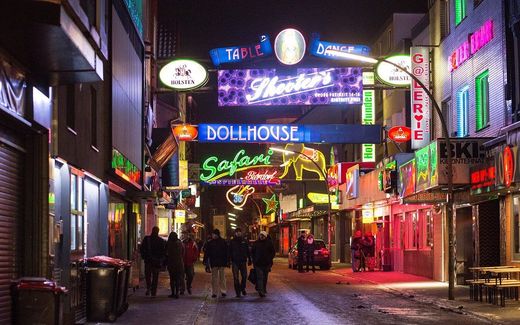
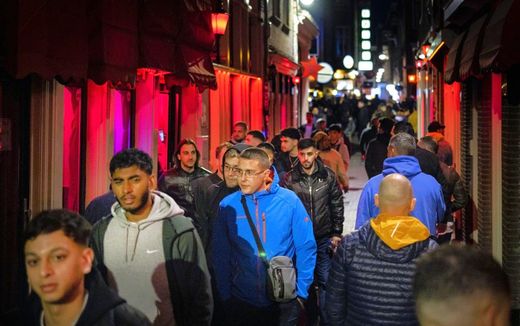
Julia Klöckner, who was elected President of the Bundestag (German parliament) in the spring after the general election, has taken a very clear position on this and called for a ban on the purchase of sex based on the Nordic model. Soon after her election, she described Germany in interviews as the "brothel of Europe" and criticised the fact that German laws do not effectively protect women. She pointed to violence, forced prostitution and organised crime in the German red-light district and called for a clear political change, away from the normalisation of prostitution.
Such a clear Christian stance against the liberal zeitgeist is remarkable. Here, fundamental Christian values are being asserted: if human beings are created in the image of God, their bodies cannot be the subject of a sales contract. Punishing the clients identifies sin for what it is: exploitation of need and vulnerability, because prostitutes in Germany are often migrants and socially disadvantaged.
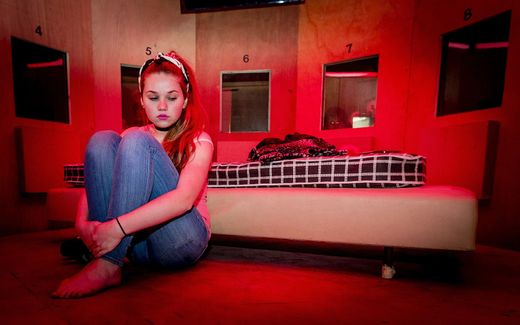
From a Protestant perspective, this is a rare example of political clarity: the Vice-President of the Federal Republic of Germany publicly states that the current legislation is not neutral, but rather partly responsible for suffering and systematic exploitation. In short, inhumane, a system that treats women as commodities.
Conception
The European Parliament's decision to support the citizens' initiative “My Voice, My Choice” stands in stark contrast with this view. There, the majority of the Parliament is calling for an EU-funded solidarity mechanism to give women whose national laws restrict abortion access to "safe and legal abortions" in other Member States. Member States are being called upon to liberalise their laws.
The resolution, which is only an appeal and has no binding effect, calls for EU funds to be used to finance abortions in other Member States. Almost all MEPs from the Social Democrats, Greens, Liberals and Left voted in favour, while almost all Conservatives/Reformists and MEPs from Europe of Sovereign Nations, as well as half of the Christian Democrats, including almost all German CDU/CSU MEPs, voted against (others abstained).
This is a dramatic signal from „Europe”: instead of strengthening the protection of unborn life, a majority of European MEPs want to circumvent national protection standards in the EU. The woman's body is politically defined as an autonomous zone in which the unborn child hardly exists legally, even though, according to the biblical understanding, it is a life willed by God from the moment of conception.
Sexual ethics
The contrast between the German CSU's decision on the Nordic model and the EU's appeal for cross-border abortion reveals two completely different concepts of freedom: In the German debate on prostitution, the President of the Bundestag and the CSU are focusing on a freedom that protects the weaker members of society and seeks to restrict the demand for sexually exploitative “services” – contrary to the current liberal legal situation in Germany.
In contrast, the European Parliament's decision on abortion shows that freedom is understood primarily as comprehensive control over one's own body, with unborn life only playing a marginal role and the standard of protection being determined by the most liberal member states.
From a Protestant biblical perspective, true freedom always entails responsibility before God and one's neighbour. That is why I believe it is right to punish clients who treat other people as commodities. However, it is contradictory and hardly compatible with the Bible to simultaneously weaken the political protection of the most vulnerable – the unborn – and publicly celebrate this as progress.
The current decisions show how strongly sexual ethics issues have become a battleground for fundamental conflicts of values.
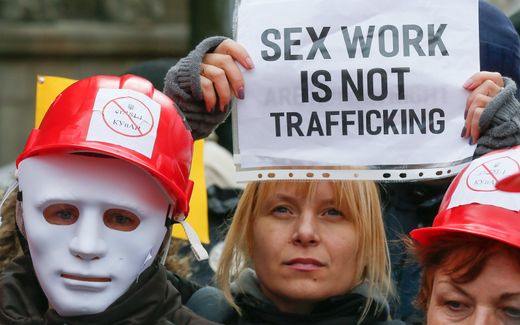
It is noteworthy that Christians in Germany are joining forces with non-Christian actors such as feminists (Alice Schwarzer) in the discussion about the Nordic model. They not only understand our Christian view on humanity but share it on key issues! This shows that Christians in today's world do not have to be marginalised, but that it is meaningful and possible to seek alliances and act across political camps.



Related Articles